

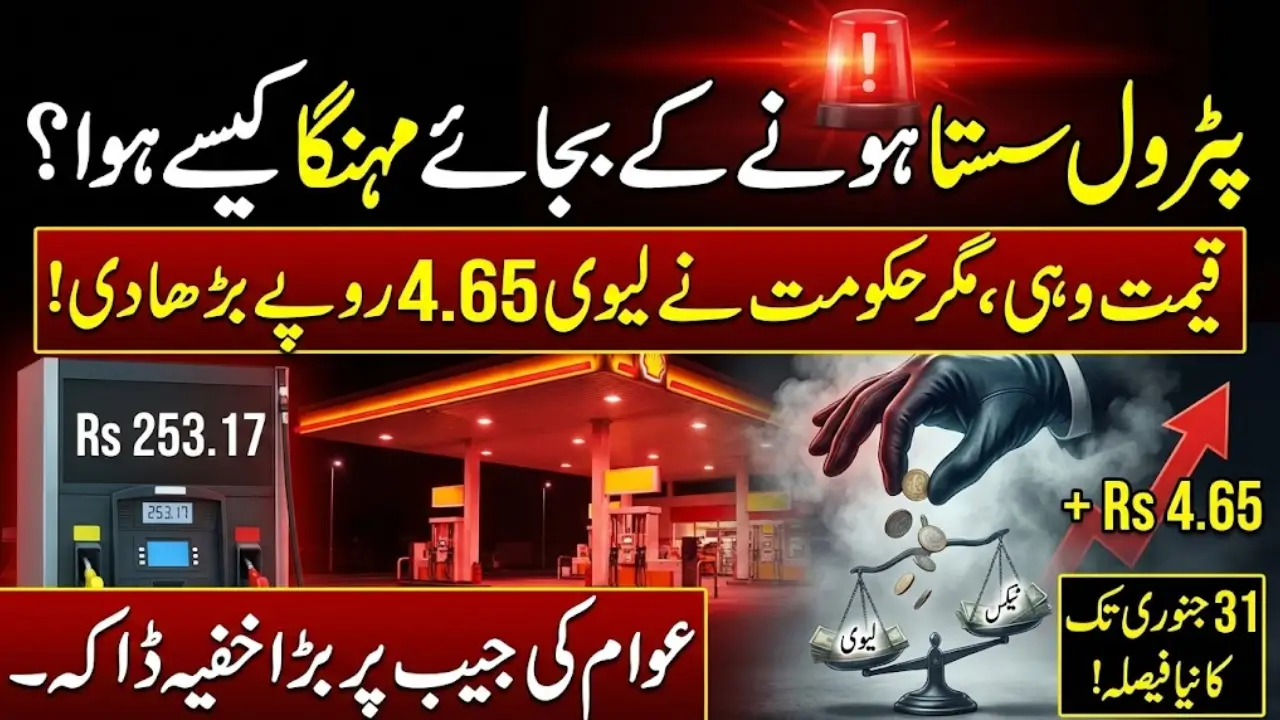
Government Increases Petroleum Levy Again
The federal government has once again increased the petroleum levy, putting additional pressure on fuel prices across Pakistan. The move comes amid ongoing fluctuations in global oil markets and domestic fiscal considerations. This decision affects both petrol and diesel, impacting daily expenses and transportation costs for citizens.
Fuel Prices Update 2026 Pakistan
Petrol levy increased by Rs. 4.65; diesel affected too

Government raises petrol and diesel levies amid global oil fluctuations
- Prices fixed until January 31, 2026
- Affects transport costs and household expenses
Petrol: Rs 84.27/l | Diesel: Rs 76.21/l | Official retail unchanged

- Petrol levy increased from Rs 79.62 to 84.27
- Diesel levy increased from Rs 75.41 to 76.21
Maintain fiscal stability and balance revenue amid rising global oil prices
- Prevents large retail price fluctuations
- Supports public and infrastructure funding
Higher levies may increase transport fares and goods prices

- Small effect on household fuel initially
- May influence inflation indicators over time
Mixed reactions: concern over daily costs, recognition of policy constraints
- Transport unions warn of potential fare increases
- Economists suggest targeted relief for low-income households
Next official fuel price review scheduled for January 31, 2026
- Adjustments may depend on global crude trends & currency fluctuations
- Consumers should monitor official notifications
The government’s latest adjustment is part of its strategy to manage revenue while balancing the potential relief to consumers. Officials have confirmed that these rates will remain in effect until the next fuel price review, set for January 31, 2026.
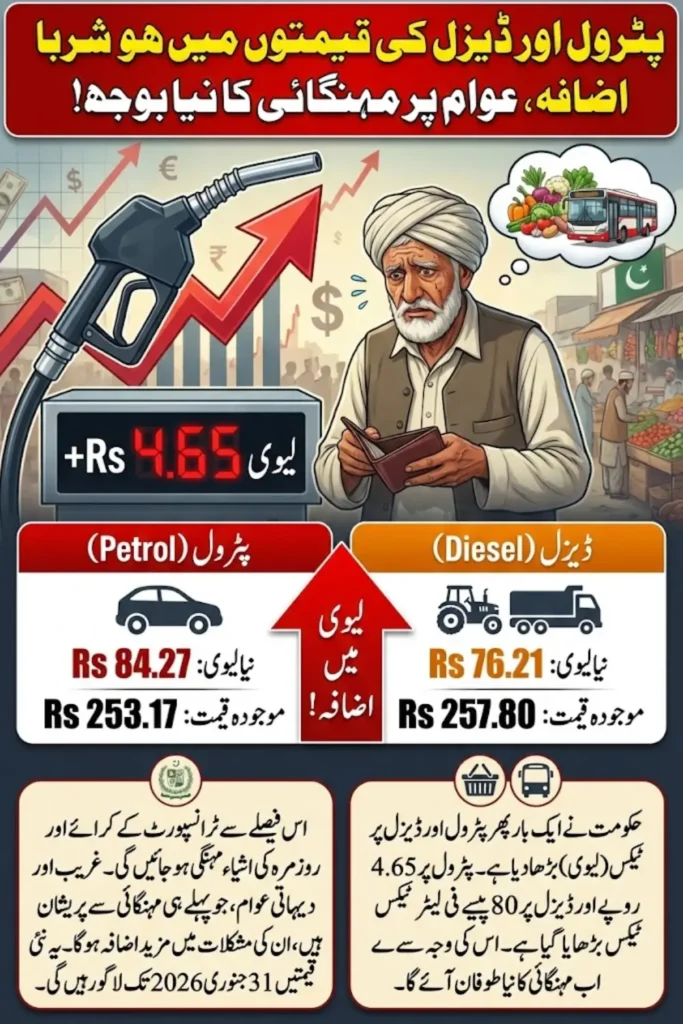
- Petrol and diesel levies increased
- Prices fixed until January 31, 2026
- Part of government revenue management policy
- Affects transport costs and household expenses
Also Read: 8171 Web Portal 2026 (ویب پورٹل) For Registration in Ehsaas Program
New Petrol & Diesel Rates Explained
Following the recent announcement, the petrol levy has increased by Rs 4.65 per liter, raising it from Rs 79.62 to Rs 84.27. Diesel has also been affected, with its levy increasing by 80 paisa, from Rs 75.41 to Rs 76.21 per liter.
Despite the levy hike, the official retail prices of petrol and diesel remain at Rs 253.17 and Rs 257.8 per liter, respectively, until the end of the month. Experts note that without the levy increase, petrol could have been slightly cheaper by about Rs 4.50 per liter.
| Fuel Type | Previous Levy | New Levy | Official Price per Liter |
|---|---|---|---|
| Petrol | Rs 79.62 | Rs 84.27 | Rs 253.17 |
| Diesel | Rs 75.41 | Rs 76.21 | Rs 257.80 |
Reason Behind the Rs. 4.65 Levy Hike
The government stated that the levy increase is necessary to maintain fiscal stability amid rising global oil prices. This adjustment helps secure additional revenue for the federal budget while preventing larger fluctuations in retail fuel rates.
Analysts suggest that maintaining fuel prices without adjusting the levy could have resulted in losses for the government and potentially reduced funding for critical infrastructure and social programs. The levy hike is therefore seen as a compromise to keep retail prices stable for the short term.
- Fiscal balance and revenue generation
- Counterbalance to global oil price volatility
- Prevents large-scale retail price fluctuations
- Supports funding for public and infrastructure projects
Also Read: NSER Survey 2026 For New Registration Ehsaas 8171
Impact on Transport, Inflation & Daily Expenses
The increased levies on petrol and diesel are expected to influence the transportation sector directly, especially for logistics, public transport, and goods delivery. This can lead to slight price increases for commuters and everyday commodities.
Households may feel the pinch in daily expenses, particularly for private vehicle use and fuel-dependent utilities. While the levy does not directly increase retail prices, its impact will eventually flow through the economy in the form of higher transport and distribution costs.
- Higher operating costs for transport services
- Potential increase in prices of goods and services
- Small effect on household fuel expenses initially
- May influence inflation indicators over time
Also Read: BISP Program Online Registration 8171 New Update
Public & Industry Reaction to Fuel Price Pressure
The increase in petrol and diesel levies has drawn mixed reactions from the public and industry stakeholders. Citizens express concerns over rising living costs, while industry experts argue that the adjustment is necessary to keep energy markets stable.
Transport unions have warned that prolonged high levies could lead to fare increases, while economists urge the government to consider targeted relief measures for low-income households. Social media reactions reflect public frustration but also recognition of the government’s limited room to maneuver.
- Citizens concerned about higher daily costs
- Transport unions anticipate fare increases
- Economists recommend targeted relief
- Mixed public sentiment but understanding of policy constraints
Also Read: Cholistan Desert Rally 2026 Gets New Dates – Updated Route, Venue & Complete Event Plan Revealed
What to Expect in Upcoming Fuel Price Reviews
With the next official review scheduled for January 31, experts anticipate that petrol and diesel prices may either remain stable or see minor adjustments depending on international crude oil trends and currency fluctuations.
Market watchers suggest that global oil price movements and domestic taxation decisions will play a critical role in determining whether fuel prices rise or fall in the coming months. Consumers are advised to monitor announcements closely to plan expenses.
- Next review: January 31, 2026
- Adjustments depend on global crude oil trends
- Currency fluctuations could influence domestic rates
- Consumers should track official notifications for updates
Also Read: Pakistan to Introduce New Currency Notes Soon – Modern Designs with Advanced Security Features
FAQs
Why did the government increase the petrol and diesel levy?
The levy hike helps maintain fiscal balance, stabilize revenue, and manage fluctuations in global oil prices.
Will the retail price of fuel increase immediately?
No, petrol and diesel prices will remain fixed at Rs 253.17 and Rs 257.8 per liter until January 31, 2026.
How does the levy hike affect transportation costs?
Higher levies indirectly increase fuel costs for transport operators, which may lead to higher fares or goods prices.
Could petrol prices have decreased without the levy hike?
Yes, experts note that petrol could have been cheaper by around Rs 4.50 per liter if the levy had not been increased.



When will the next fuel price review occur?
The next official review of fuel prices is scheduled for January 31, 2026.